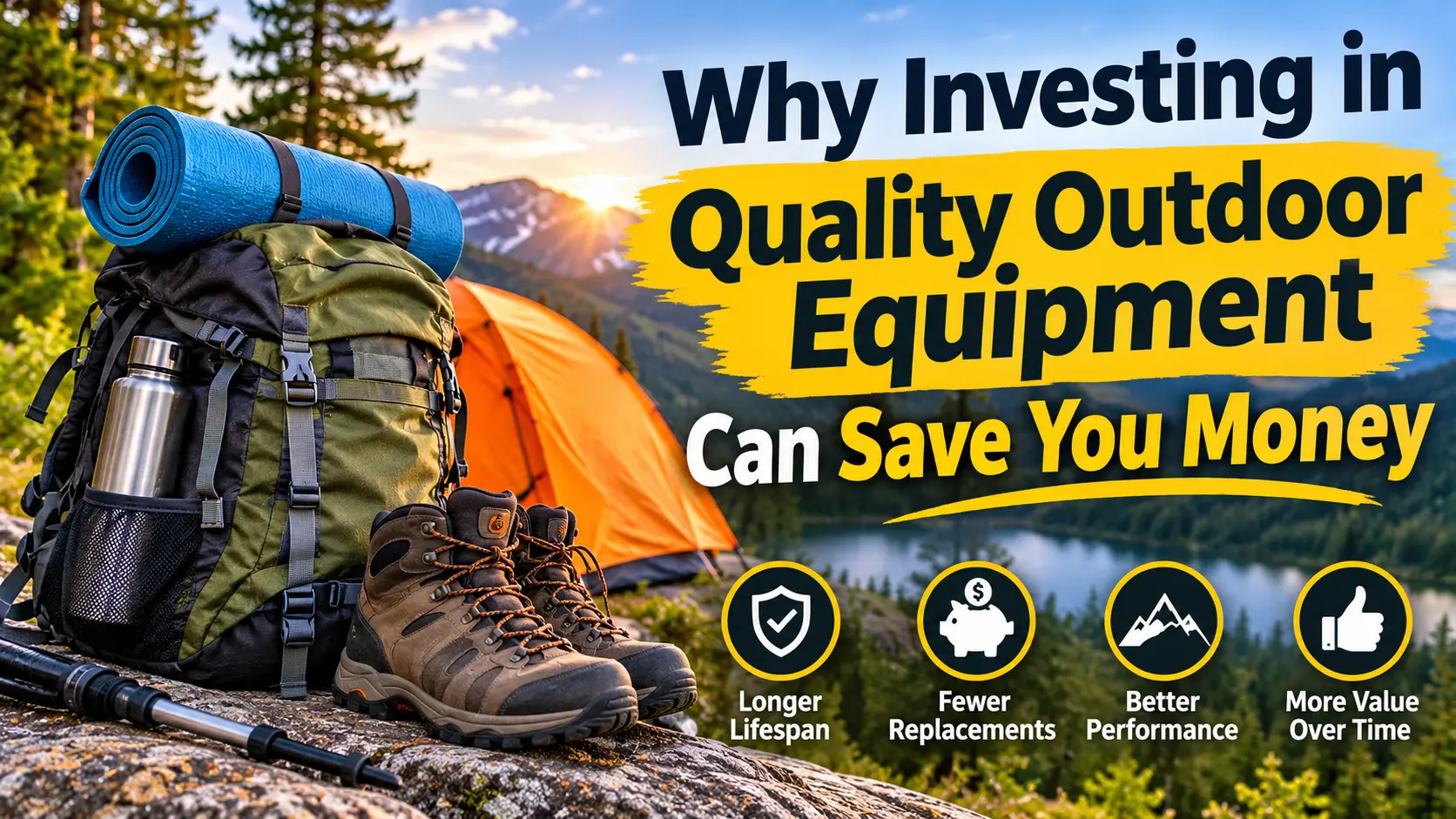
Outdoor adventures are more enjoyable when you have equipment you can rely on. Whether you’re camping, hiking, fishing, or heading out for a weekend trip, the right gear makes a real difference. This is especially true of camping gear, which has to perform night after night in changing conditions.
It can be tempting to save money by choosing the cheapest products available. However, budget equipment doesn’t always offer the best value. Poor materials, weak construction, and unreliable performance can lead to frequent repairs and replacements.
Spending more on quality gear may seem expensive at first, but it can save you money over time. Here’s why.
1. Durable Equipment Lasts Longer
Outdoor gear has to deal with rain, sunlight, dirt, rough surfaces, and regular use. Products made with stronger materials and better construction are generally better equipped to handle these conditions.
A quality backpack, for example, may have reinforced stitching, sturdy zippers, and abrasion-resistant fabric. A well-made tent might feature stronger poles, reliable attachment points, and durable flooring.
These details help prevent premature wear and reduce the need to replace camping gear after only a few trips.
2. Look Beyond the Initial Purchase Price
The cheapest product isn’t necessarily the most affordable in the long run. Repairs, maintenance, and replacement costs all contribute to the total cost of ownership.
Imagine buying a $15 camping lantern that lasts one year. Replacing it annually for five years would cost $75. A $45 lantern that lasts the entire period would be the cheaper option, assuming similar running costs.
You can also compare equipment by calculating its cost per use. A $150 pair of hiking boots used for 150 hiking days costs roughly $1 per day. A $60 pair that lasts only 30 days costs $2 per day.
This simple comparison can help you make smarter purchasing decisions.
3. Reliable Gear Handles Challenging Conditions Better
Weather can change quickly outdoors. Rain, strong winds, muddy trails, and low temperatures can put equipment to the test.
A dependable waterproof jacket, a properly constructed tent, and a suitable backpack help you deal with these conditions more comfortably. However, check product specifications carefully. Expensive gear isn’t automatically suitable for every environment.
Reliable equipment also makes everyday activities easier. Comfortable backpacks distribute weight more effectively, while hiking boots with suitable support and traction make uneven trails easier to navigate.
4. Spend More on Footwear, Backpacks, and Tents
Some outdoor products deserve more attention when planning your budget, and these are often the most important pieces of camping gear you’ll own.
- Hiking boots: Look for a comfortable fit, supportive construction, and durable soles. The right footwear should match your feet, activity, and intended terrain. Price alone doesn’t guarantee comfort or suitability.
- Backpacks: Padded shoulder straps, adjustable hip belts, supportive back panels, and strong stitching can make a noticeable difference, particularly on longer trips. Check whether replacement buckles and other components are available.
- Tents: Pay attention to waterproofing, sealed seams, pole strength, ventilation, and the quality of zippers. Choose a model designed for the weather conditions you expect to encounter.
5. Quality Equipment Can Reduce Repairs
Even well-made products need maintenance, but repairable equipment can remain useful for much longer.
Some manufacturers offer replacement parts, repair services, or warranties. A tent with available replacement poles or a backpack with replaceable buckles may be worth keeping rather than replacing entirely.
Basic care also matters. Dry tents before storing them, clean muddy boots, follow washing instructions for waterproof clothing, and inspect equipment regularly.
Small maintenance tasks can prevent minor problems from becoming expensive repairs.
6. Don’t Pay for Features You Don’t Need
Buying quality doesn’t mean choosing the most expensive product in every category.
Someone who camps occasionally doesn’t necessarily need an expedition tent. Similarly, casual hikers may not require specialised mountaineering footwear.
Think about how often you’ll use an item, what conditions it needs to handle, and which features genuinely matter. Versatile camping gear can also offer better value if it works well across several activities.
For frequently used or safety-critical equipment, reliability should take priority over price. Items such as helmets, climbing gear, and emergency equipment should meet the relevant standards and suit the intended activity.
Make Your Outdoor Gear Work for Your Budget
Quality outdoor equipment is an investment when it provides dependable performance over several years. Longer lifespans, fewer replacements, and easier repairs can make a higher initial price worthwhile.
Start with essentials such as footwear, a backpack, weather protection, and sleeping equipment. Compare materials, construction, warranties, and customer feedback before buying camping gear.
Ultimately, the best outdoor gear isn’t necessarily the most expensive. It’s equipment that suits your needs, performs reliably, and gives you lasting value every time you head outside.